
by Amanda Kingsmith | Nov 3, 2017 | Blog, Business
In his book 7 Habits of Highly Effective People , Steven Covey speaks of Sharpening the Saw.
“If you spend the whole day sawing away and yet never find time to actually sharpen your saw,” he says, “you are doing something fundamentally wrong”.
Sometimes, I still teach classes that feel uninspired — and often it’s because I’ve neglected to keep my saw sharp. Keeping your saw sharp is about preserving and enhancing your skills and assets. And, as teachers, there are so many ways we can invest in our own capabilities.
Here are 25 ideas for yoga teachers, wanting to sharpen the saw:
- Take another teacher’s class of the same style you teach.
- Take another teacher’s class of a totally different style.
- Practice on your own to a podcast. I practice to this one at home.
- Read Books, and then relate them to your classes. (I’ve found a lot of class inspiration from Thrive
 , Rising Strong
 , and even Spark Joy
- Sign up for a weekend training for assisting, children’s yoga, or acro-yoga.
- Listen to non-yoga podcasts. I love Ted Radio Hour for delivering multiple Ted Talk lessons in one show.
- Read blogs and websites like Yoga Journal for inspiration on sequencing or meditation.
- Pay attention to how your favourite YouTube and Instagram yogis are sequencing their asana.
- Keep a dedicated notebook full of flows and languaging that has landed with you.
- Learn something new about anatomy. In my highschool kinesiology class we used this awesome anatomy colouring book
 , and in my teacher training we read The Key Muscles of Yoga by Ray Long.
- Find a lecture on a yoga topic that interests you. For ideas, check out the Yoga Conference schedule (March 31st to April 3rd in Toronto).
- Set aside some time to actually revisit all the notes you took in teacher training.
- If you have the option, volunteer to help out with the teacher training you took.
- Practice to music.
- Practice in silence.
- Pick a pose and learn everything about it. Then teach it (This deck of cards features 50 poses and meditations to choose at random).
- Explore other Eastern practices like Tai Chi.
- Sweat it out at a core class.
- Ask for feedback after class (if you’re more comfortable, ask a friend or another teacher who was in the room). What landed? What didn’t?
- Practice other ways of being creative. Paint, draw, dance, handwrite, compose, play the piano. Start to see yourself as a creative being.
- Read traditional texts. This year, I commit to reading The Bhagavad Gita
 .
.
- Use journaling as an outlet.
- Go to a workshop and learn about all of the foundational elements that go into related postures (even if you already know how to do them).
- Meditate. If you’re new to meditation, try an app like Headspace.
- Try something out of your element, and remember what it’s like to be a new student again. Last week I tried Body Art and it was amazing (It’s taught regularly at MISFITSTUDIO and Equinox in Toronto).
How do you find ways to inspire your teaching? Share your saw sharpeners in the comments below.
Laura Fraser is a yoga teacher, digital media specialist & hand-lettering artist. You can learn more about Laura here.

by Amanda Kingsmith | Nov 2, 2017 | Blog, Lifestyle
As a yoga teacher, you already know the numerous benefits that yoga offers, but what about your friends and family? Sometimes it can be a hard sell to convince them to try a class (yours or not). This post will highlight a few of the benefits of yoga that you can use to convince your friends & family that they need to try yoga! (more…)
by Amanda Kingsmith | Oct 30, 2017 | Niching, Show Notes
Download the Episode or Subscribe on iTunes!
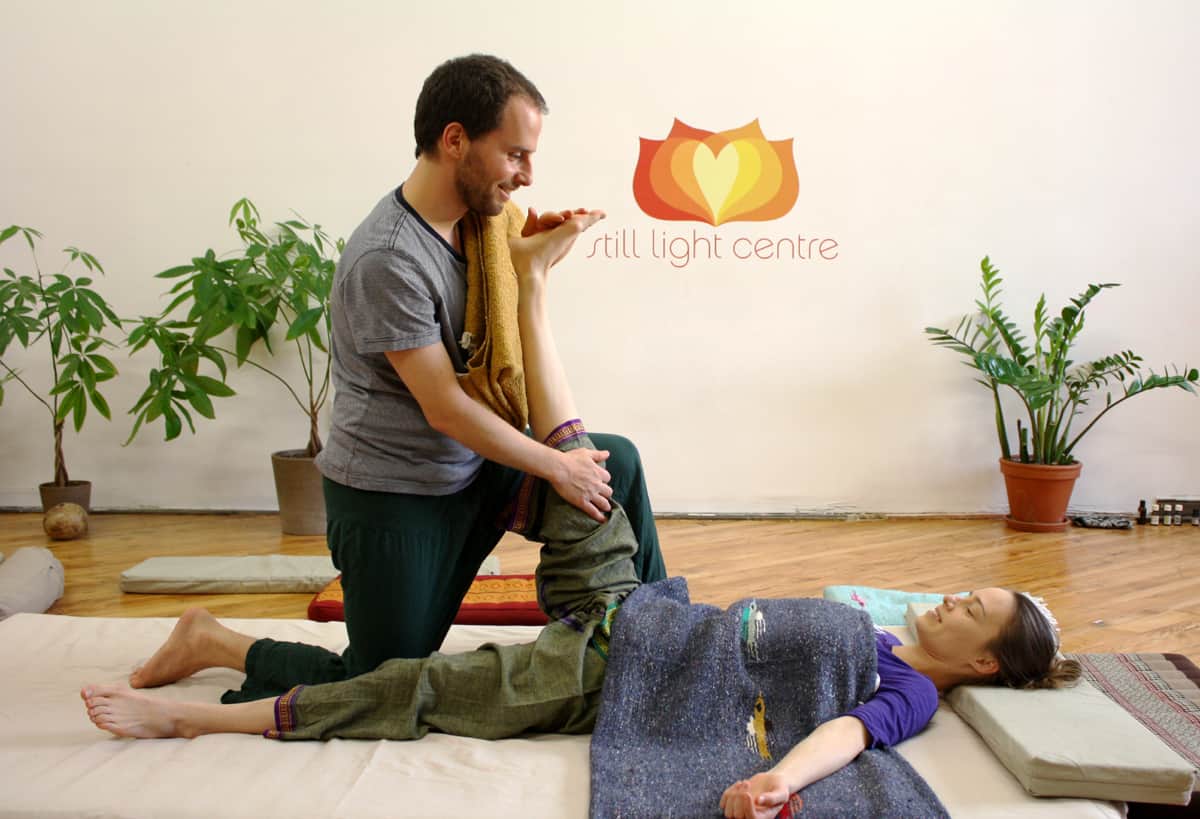
On this episode of the podcast, I am joined by Thai massage teacher and best selling author, Shai Plonski. Shai is the founder of the Still Light Centre, and has been teaching and practicing Thai massage for over 15 years.
Shai shares how he got into Thai massage, how he has grown his business, and how Thai massage can expand a yoga teacher’s business offerings. We touch on how Thai massage can expand your offerings in privates, help you to become more comfortable offering adjustments in your regular classes, as well as how you can use Thai massage in your regularly scheduled classes (think head massage in savasana!). We also touch on how Thai massage gives you an opportunity for a new workshop offering, and how, overall, it can help yoga teachers make more money in a really fulfilling way.
I left this episode feeling inspired to learn more about Thai massage, and I hope you do too!
Enjoy!
(more…)

by Amanda Kingsmith | Oct 27, 2017 | Blog, Business
No matter what kind of business you run, you want come up in Google searches that are relevant to you and what you do. Even if you are a yoga teacher working as an independent contractor, you will want your website to come up when a student or studio owner searches your name.
Search Engine Optimization (SEO) can sound intimidating, but it basically involves finding ways to appear higher up in the results on search engines like Google. Appearing higher up in a search means more traffic to your site, as more people are able to find you easily online. For a yoga teacher, this might mean making sure your website comes up when someone searches your name, or even if they are searching generically for a “yoga teacher in toronto”.
While SEO can become complex and requires some technical knowledge, every one of my recommendations below are things that you can accomplish today.
1. Link To Your Own Content
When it comes to how high up your website ranks, Google’s algorithm takes many things into consideration. One of those things is how many links there are to your content (including your own internal links, and other people’s external links to your site). You can of course increase the links to your site in a number of ways:
- Share links to your website on social media (in posts and in your bios)
- Link to your website from any other websites you own (where applicable)
- Link back to your old content when writing new content
2. Consider Keywords
What searches do you want to appear in? For me, I want my personal website to come up when people search things like “laura fraser yoga”. The idea is to now use those keywords throughout my site. Considering an individual page on my website, I want the title, the URL, the meta description (think: the two preview sentences that show up under a search result in Google), and the content of that page to all include the keyword “laura fraser yoga”, if possible. I really like the free WordPress Plugin Yoast SEO because it makes this process easy. After you install the plugin, you will be able to see something like this under your content when editing a post or a page. I usually start by choosing my Focus Keyword, and then by editing the Snippet that will appear on Google to include that keyword. Yoast will analyze your content and make recommendations for how you can improve your SEO. It even displays a traffic light ranking system of how strong your SEO is for a page or post.

3. Create Better URLs
You can set your WordPress settings so that the URLs for new pages and posts are automatically named after the title of each post. I like to keep my URLs clearly labelled. For example, littleblackleggings.ca/seo-basics will perform stronger in searches than a string of letters and numbers, and includes important keywords for this post. Note: If you are going to update the URLs for old posts, make sure to update any links that you may currently have pointing to that page to the new URL.

4. Make Use of Image Descriptions
When Google’s invisible “crawlers” scan your webpage for keywords, they are looking for text. They cannot “see” your pictures to know that they are about yoga, but there is a simple way for you to tell them. When adding an image to your posts, make use of the Alt Text section to type in a few keywords about your post. This will not be visible to your readers, but it will be picked up when Google is deciding how high to rank your page.

5. Go Mobile Optimized
When choosing a theme for your website, choose one that can also be viewed properly on mobile devices. Not only is it a better experience for your users, but Google will rank mobile optimized sites higher when someone is searching on a smartphone. When choosing a theme, look for words like “mobile optimized”, “reponsive”, or “dynamic”. It might mean saying goodbye to a theme you love for desktop, but as mobile searches grow, you will want to rank for people on the go too.
Laura Fraser is a yoga teacher, digital media specialist & hand-lettering artist. You can learn more about Laura here.
by Amanda Kingsmith | Oct 23, 2017 | Niching, Show Notes
Download the Episode or Subscribe on iTunes!
Shannon has been a yoga teacher for over 10 years. She has specialized in prenatal & postnatal yoga, she’s done thai massage, she’s worked with yoga teachers 1-on-1, she’s managed a yoga studio, and so much more. Now, Shannon has 3 children so she’s learned to say “no” and to hone in on what she really loves to do, and right now, her personal teaching revolves around yoga for pelvic health.
On this episode, we talk about Shannon’s evolution as a yoga teacher, how she has come to specialize in yoga for pelvic health, how and why she created The Connected Yoga Teacher, how she has created a successful online community with live shows and online courses, as well as tips for creating your own personal brand and successful online community.
Enjoy!
(more…)


 ,
,  , and even
  , and in my teacher training we read
  .
.